Showing posts with label Chu Chi Wai. Show all posts

Thursday, November 24, 2016

61intake_CHU_Chi_Wai_10550989_Project2_Blog10

Theoretical Consideration


As a result of the pervasiveness of photography in today’s world many of its distinctive features go uncontemplated. In this respect is hardly a coincidence that in recent decades photography has gained an increasingly larger role in contemporary art. Much of this work precisely seeks to engage in reflection on the photographic language of everyday life. The literature on photography mainly consists of biographical publications of leading photographers, overviews of their work, and histories of photography. Other publications are devoted strictly to theoretical debates on the nature of photography, disregarding biographical or historical aspects. This book concentrates on theories of photography in a more broad and an integrated fashion, albeit without pretending to offer an ontology of photography. In scholarly work on media, the concept of ontology generally refers to medium specificity, that is, defining the basic differences between one medium and other media. In line with Sabine Kriebel, we feel it is impossible to capture the essence of photographs in a single definition.


Photography Theory in Historical Perspective.

References:


61intake_CHU_Chi_Wai_10550989_Project2_Blog9

Research on Nicolas Grospierre Photography


Nicolas Grospierre born in France and his work is described as on hand documentary and on the other conceptual. His photographic works explore collective memories of architectures and the faded utopias it represents. Besides, his work relates to architectural practice, which mainly towards the living in between and around the architecture that he photographs.


Examples of prefabricated concrete modules (balconies).


Kolorobloki.


The House Which Grows, phase #1.


Lithuanian Bus Stops.


Not Economically Viable, NEV #1.


The Self-Fulfilling Image.


61intake_CHU_Chi_Wai_10550989_Project2_Blog8

Research on Simon Kennedy Photography

Simon Kennedy's vision has been developed in a different way. Years of working as a qualified architect combined with teaching post-graduate architectural studies, the experiences that he has provides him a better understanding of architecture and a greatly insightful photographic vision, which continues to develop and be informed by his teaching practice with different architects.


London Architectural Photographer. 


Castle Green Woodland Gardens Moat Bridge
in Taughton by Moxon Architects.


View of site from Castle Green Bridge.


View back across the bridge and Castle Green.


Illuminated Bridge and Castle.


Lit bollards that face the entrance to Moat Bridge.


61intake_CHU_Chi_Wai_10550989_Project2_Blog7

Research on Michael Kenna Photography


Michael Kenna is an English photographer born is 1953. He is famous in his unusual, black & white landscapes with ethereal light implemented by photographing at daybreak and at night with the exposures of more than 10 hours. Besides, His work has been shown in galleries and museums in Asia, Australia and Europe. From his Image Archive, Concentration Camps from 1989 to 2000 is my main focus.


Perimeter Wall and Guard Tower, Sachsenhausen, Germany, 1994.


Field 5 Watch Towers, Lublin-Majdanek, Portland, 1998.


Jewish Memorial, Dachau, Germany, 1994.


Storehouse, Buchenwald, Germany, 1995.


Surgical Instruments, Sachsenhausen, Germany, 1994. 


Arbeit Macht Frei, (Work Makes Free), Study 1,
Theresienstadt, Czechoslovakia,  1989.

References: http://www.michaelkenna.net/index2.php
                    https://en.wikipedia.org/wiki/Michael_Kenna_(photographer)


61intake_CHU_Chi_Wai_10550989_Project2_Blog6

In this blog, I will showcase some of the photos that are relevant to my project since it is necessary to let the audience know and understand the historic buildings from different perspective.


I have been to Lai Chi Wo village but no one's there.


Some of the house in Lai Chi Wo is enormous. It should
contain many household in the past.


Here's the corridor between the houses.


The painting outside the house.


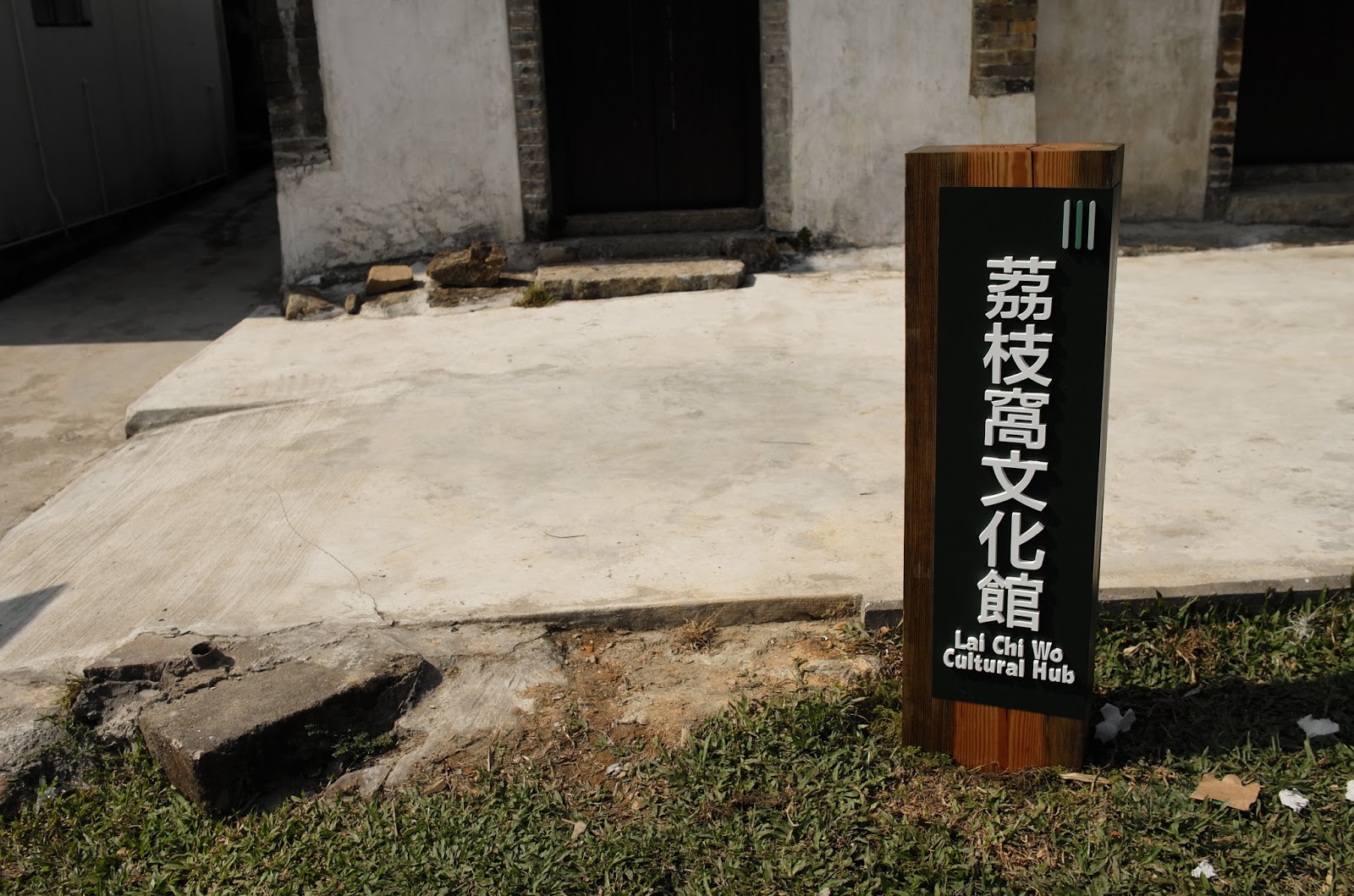
Actually there is a Lai Chi Who Cultural Hub and allow us to visit.


There is a empty school and people living
there used for selling foods and drinks.


It is captured in Wu Kau Tang.


It is named as Cheung Sau Gate in Lai Chi Wo village.


61intake_CHU_Chi_Wai_10550989_Project2_Blog5

In this blog I will showcase some of the photos that relate to the fourth category of my project, which is external look of the buildings. Throughout the project, I would like to introduce and guide the audience by viewing the photos in a first person perspective. For instance, what they usually used in the past, how was the environment and setting looked like and the closer look of the buildings.


Some of the houses are with doors and some are not.


Here's a house locate at Lai Chi Wo.


Here's a house locate at Sam A.


I believe it is used for storage in the past.


Some of the houses have already became a part of nature.


There is a proper house and allow me to get into it.


I can feel the sadness while walking past the houses.


This is the smallest house throughout the whole trip.


61intake_CHU_Chi_Wai_10550989_Project2_Blog4

Lai Chi Wo, North East New Territories

Lai Chi Wo is a traditional Hakka village near Sha Tau Kok and it is one of the destinations that I would like to discover and explore regarding to my topic. Besides, it is not extremely difficult to get there since there is path for hikers and people who live there. It takes an hour approximately to reach from Sam A to Lai Chi Wo. There are natural and beautiful views throughout the journey.

In this blog I will showcase some of the photos that relate to the third category of my project, which is the internal look of the buildings.


Although the environment isn't familiar to me, it's a great
 experience for me to handle different situation.


I can imagine the life of people
living in the past was simple.


There are a lot of empty houses throughout the trip.


It's hard to reach inside since the entrance is blocked.


Weeds grow around and covers the wall of the house.


People used wooden ladder in the past for their living.


Tuesday, November 22, 2016

61intake_CHU_Chi_Wai_10550989_Project2_Blog3

Sam A, North East New Territories

Sam A is a village that locates at the northeastern New Territories of Hong Kong. It is near the bay of Sam A Wan. In the 1950s to 1960s, more than 200 residents were living in the villages, especailly Hakka people. However, most of the people have left there in order to have a more convenient lifestyle. Sam A is still a village that is worth for us to discover and explore due to its historical and cultural value. We can go to Sam A by boat or on foot only.

In this blog i will showcase some of the photos that relate to the second category of my project, which is the building dark inside or even without light.


Even though there is sunlight outside the window, the house
is dark inside and dust locates everywhere.


You will be able to feel the loneliness and
emptiness while stepping into the house.


It's hard to believe there were people living there in the past.


This is one of the photos I like throughout the whole trip.


If you decide to visit Sam A, you have
to reach Sam A Wan also.


The view of Sam A Wan.


Monday, November 21, 2016

61intake_CHU_Chi_Wai_10550989_Project2_Blog2

Wu Kau Tang, North East New Territories


In the past, there were a lot of Hakka people living in Wu Kai Tang. Due to the urban development of  North East New Territories, most of them have been moved out and we are capable to see many abandoned villages and houses during the trip. Following the path of the hikers and explorers, there are empty houses, which are old and broken in terms of its appearance. Besides, the furnitures inside the houses are aged and dirty. However, the circumstances and atmospheres guide me to think and imagine about  the living and daily life of Hakka people in the 1950s.

In this blog I will showcase some of the photos that relate to the first category of my project, which is the object inside the historic buildings.


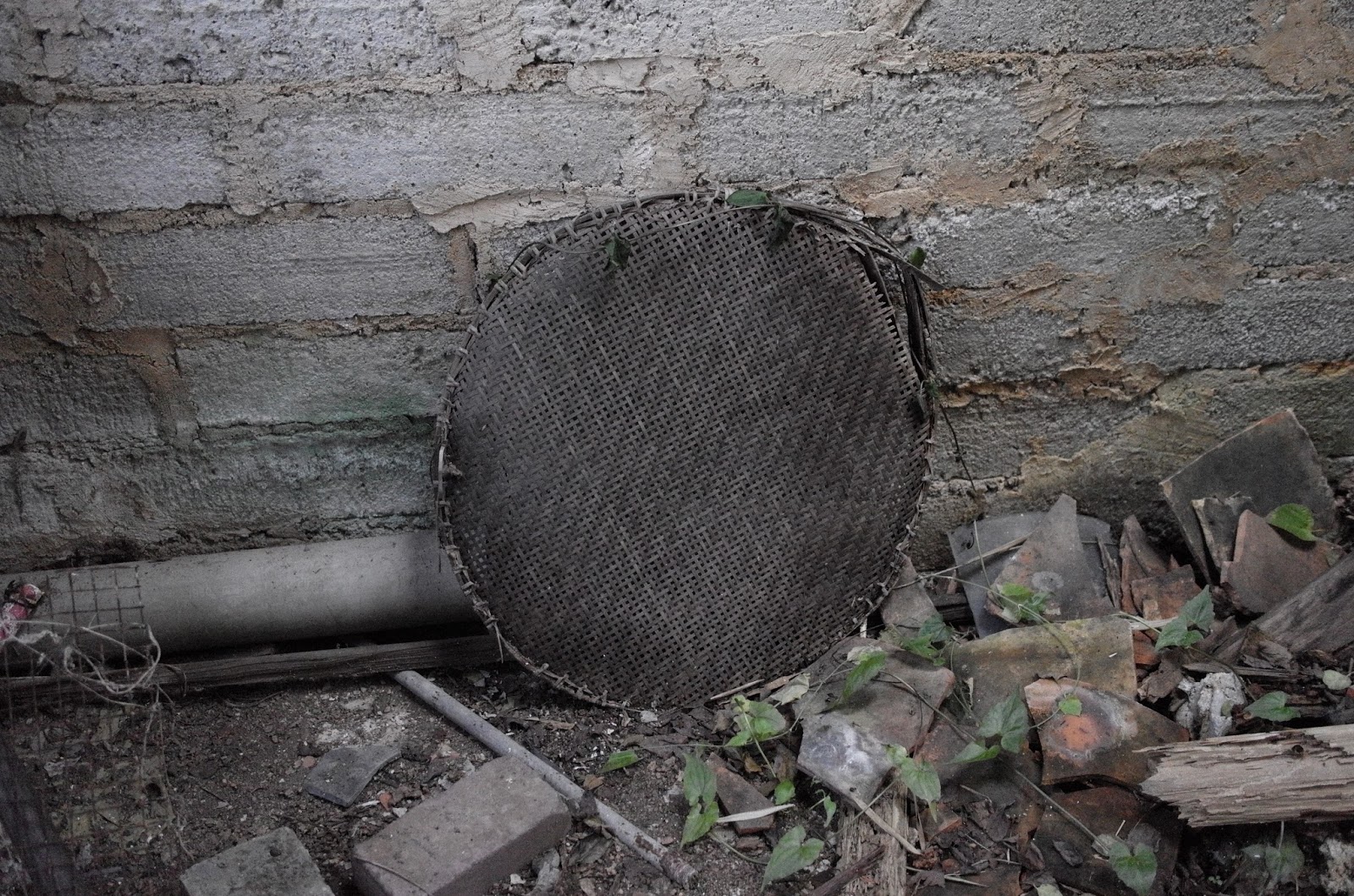
A traditional fan inside the house.


The plugs for electrical use in the past.


I have no idea why there is a red bottle
in such kind of environment.


Most of the object we believe that is common,
it becomes strange here.


There is a door lock on the floor and it locates
between the middle of the doors.


The last time I saw it was six years old
on my grandmother's hands.